Sumac Dialogues is a place for being vocal. Here, authors and artists come together in conversations, interviews, essays, and experimental forms of writing. It is a textual space to navigate the art practices of West Asia and its diasporas which emphasize critical thinking in art. If you have a collaboration proposal or an idea for contribution, we’d be happy to discuss it. Meanwhile, subscribe to our newsletter and be part of a connected network.
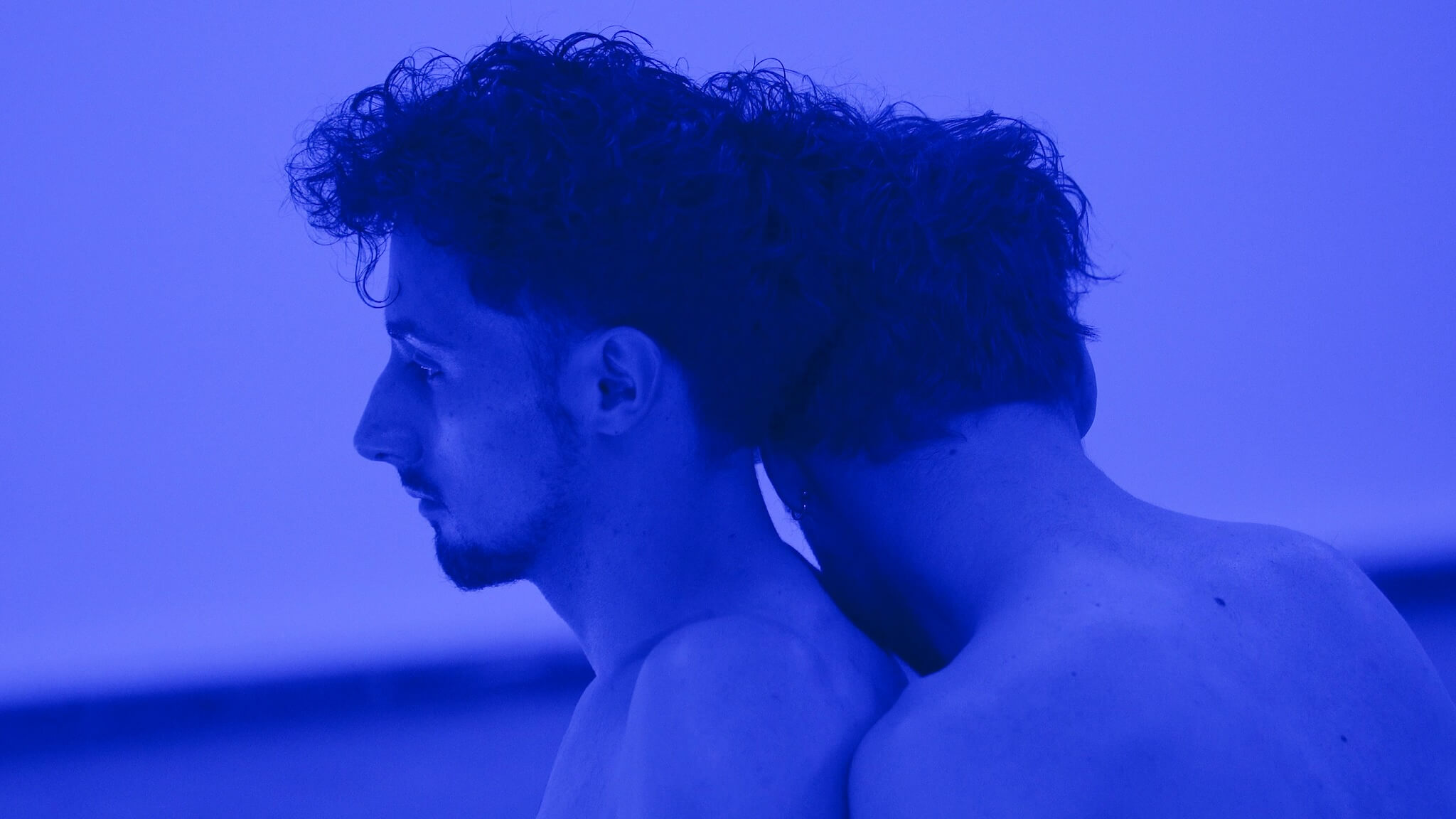
Davood Madadpoor. From what you said, Radicals Between Trees and Dicks is the result of several years of research you’ve done into the queer cruising culture in Azerbaijan, the Caucasus, and Central Asia. You visited around thirty different cruising spots—parks, saunas, and other hidden places. There, you spoke with people who shared their stories and experiences. You also included your memories in the work. All of this came together in a video composed of eleven acts. In it, you blended these personal stories with the broader social and political pressures that queer people face in these regions. Five dancers were cast to choreograph and perform the collected stories, giving them physical and emotional presence. In addition, you referred to Azerbaijan’s cinematic history.Can you walk us through these acts, your process, and how they are interconnected?
Agil Abdullayev. All eleven acts in the film form a constellation rather than a sequence, not built to be read linearly, but to be felt relationally. Each act arises from a mode of queer endurance—looking, waiting, touching, withdrawing, fleeing—not as narrative events but as psychic and bodily states that recur across space and time. They do not resolve; more likely, they resurface.
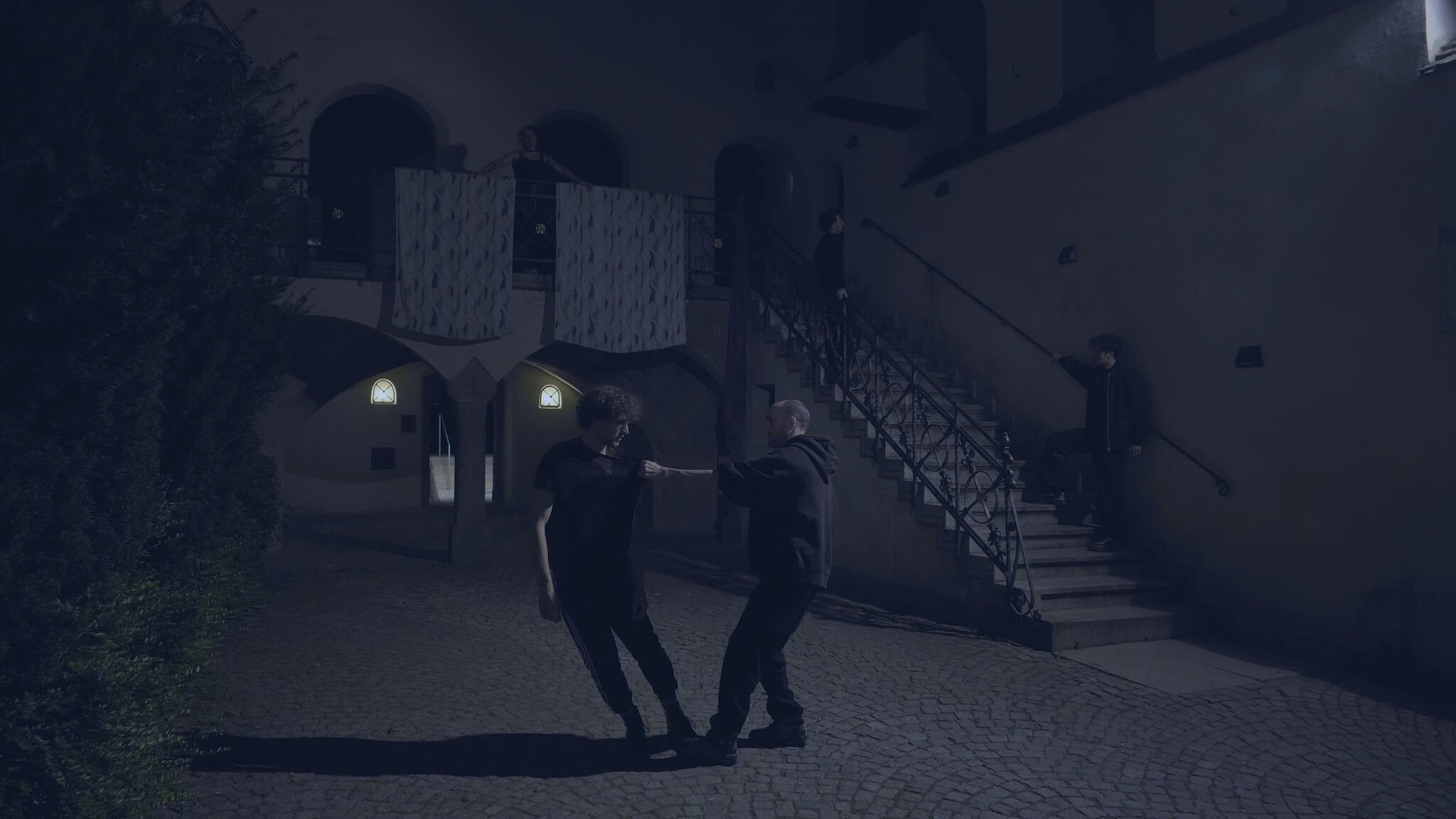
The research spanned over thirty cruising locations across Azerbaijan, the Caucasus, and Central Asia, including public toilets, abandoned parks, shadowed forest paths, and saunas reclaimed in silence. I approached these sites as unstable topographies—sometimes haunted, sometimes overflowing, and always in flux. At times, some existed only as memories, carried in the voices of those who once moved through them. These sites became intervals—temporal clearings opened by desire and risk, emerging only under certain conditions: dusk, solitude, heat, fear, and proximity.
I tried to gather at least one audio interview from each location, but this wasn’t always possible. Sometimes it was unsafe, or people declined to participate. In those cases, what remained were my own observations. These were fragments written down hours later, gestures remembered by the body rather than captured by voice. Absence became a kind of data, a material in its own right—charged, resistant, opaque. These were developed into performances.
These acts are what I consider emotional architectures—ways people relate through repetition, breath, and rhythm. The film unfolds choreographically. Acts collapse, recur, and reconfigure. This structure mirrors the affective rhythm of cruising, a practice of seeking connection that rarely moves in a straight line. Cruising is elliptical: it loops, waits, and doubles back. This is why the film carries that same rhythm—in structure and breath.
In performance, working with queer performers was essential. They did not need personal histories of cruising in parks or clubs, such as LAB in Berlin. Instead, they needed to understand the subtleties of queer language and hold ambiguity without explanation. I wasn’t interested in literal reenactment. We also used micro-gestures from interviews—shifting a jacket, turning a face, or slowing a step. These gestures carried memory and passed from one body to another, like oral traditions. Dancers became vessels, interpreting emotional charge instead of narrative content.
Each act is shaped around a particular weight or frequency. Act I is not an introduction, but a disorientation—an invitation to dwell inside uncertainty. Later acts hold heavier political tension, but never address it directly. Even the most charged sequences maintain some opacity. The acts are linked by tonality, not plot—like movements in a score. In that sense, the film is more a fugue than a documentary. Its structure allows memory, fear, shame, and desire to blend into each other without the need for resolution.
I didn’t want to map cruising spaces in a documentary sense. I wasn’t interested in cartography, but in conditions. What must be true—socially, politically, sensorially—for these spaces to appear? In this way, Radicals Between Trees and Dicks becomes less a film about cruising, and more a film that cruises. It drifts between textures of vulnerability and resistance. The film touches histories both personal and collective, and always remains slightly out of reach.

Davood. You work across film, photography, and painting, each with its strength—film’s temporal flow, photography’s stillness, and painting’s material presence. How do you use the special qualities of each to explore queer life, and how do they come together or clash in your work?
Agil. I don’t start with a medium. Instead, I begin with a question that slowly inhabits many forms. Painting, photography, performance, sculptural installation, and moving images don’t work in isolation for me. They are part of one ongoing body, each leaking into the others. A painted surface might still come from a video still. A filmic movement might mirror absence within a photograph. These references build until boundaries between media collapse.
Art is the only language I know that allows me to be heard without needing to fully explain myself. It’s how I make sense of what cannot always be said. Each medium in my practice is a way to approach silence. Photography’s stillness allows contemplation of erasure. Painting’s texture gives weight to absence. Film—being durational—allows the effect to unfold in fragments. This intermediality is essential to my practice. It reflects how queer life itself cannot be contained in a single form or narrative thread.
Davood. Your films begin in personal histories—childhood memories, diary entries—and grow into shared archives where individual and collective memories mix. In which moments or through which methods do you choose to blur the line between your own story and the broader queer archive? How does this merging open up new possibilities to build shared narratives? And how do you decide when to protect, distort, or reveal identities—especially in politically repressive situations?
Agil. The line between my memory and the collected archive is not something I intentionally blur. It becomes porous through how I approach people and experiences in research. I don’t separate what I encounter in the field from what I carry within myself. Whether it’s a conversation with someone in a park at dusk, or the feeling of a site lingering after I’ve left, these experiences inhabit me. I approach subjects—people, gestures, or landscapes—as I would experience in my own life.
Everything we experience leaves a trace within us. Research does too. What I hear, what I witness, and what I’m trusted with all become part of the emotional architecture of the work. The boundary between personal and collective dissolves—not because I force it to, but because they are already intertwined. Memory is relational. It’s built in proximity to others. The personal and collective don’t sit side by side; they fold into each other.
In this fold, I begin to build a shared archive. It’s not one that aims for historical completeness, but one that makes room for contradiction, opacity, and feeling. The stories shared with me are not simply data or testimony. They become part of a wider, unstable terrain of queer survival.
In politically hostile contexts, especially in post-Soviet regions, visibility is always a double-edged sword. It can empower, but also expose someone to danger, violence, or erasure. Many people I spoke with requested that they not be filmed or that their voices be excluded from the recording. I respect these boundaries completely. That’s why I invite performers to embody anonymized gestures. Through this process, performers also become part of the story. Many voices in the film are re-voiced by actors or digitally altered. These distortions are not about concealment. They are acts of care, preserving intimacy without reducing it to something easily consumed.
Davood. I read that you, by revisiting “queer intimacy, self-reflection, anger, fear, and belonging,” aim to create a space of “hyper‑possibility” as sites where queer narratives aren’t handed down but actively fractured and remade. Can you elaborate on this, and how do you conceive the capacity of these hyper‑possibility spaces?
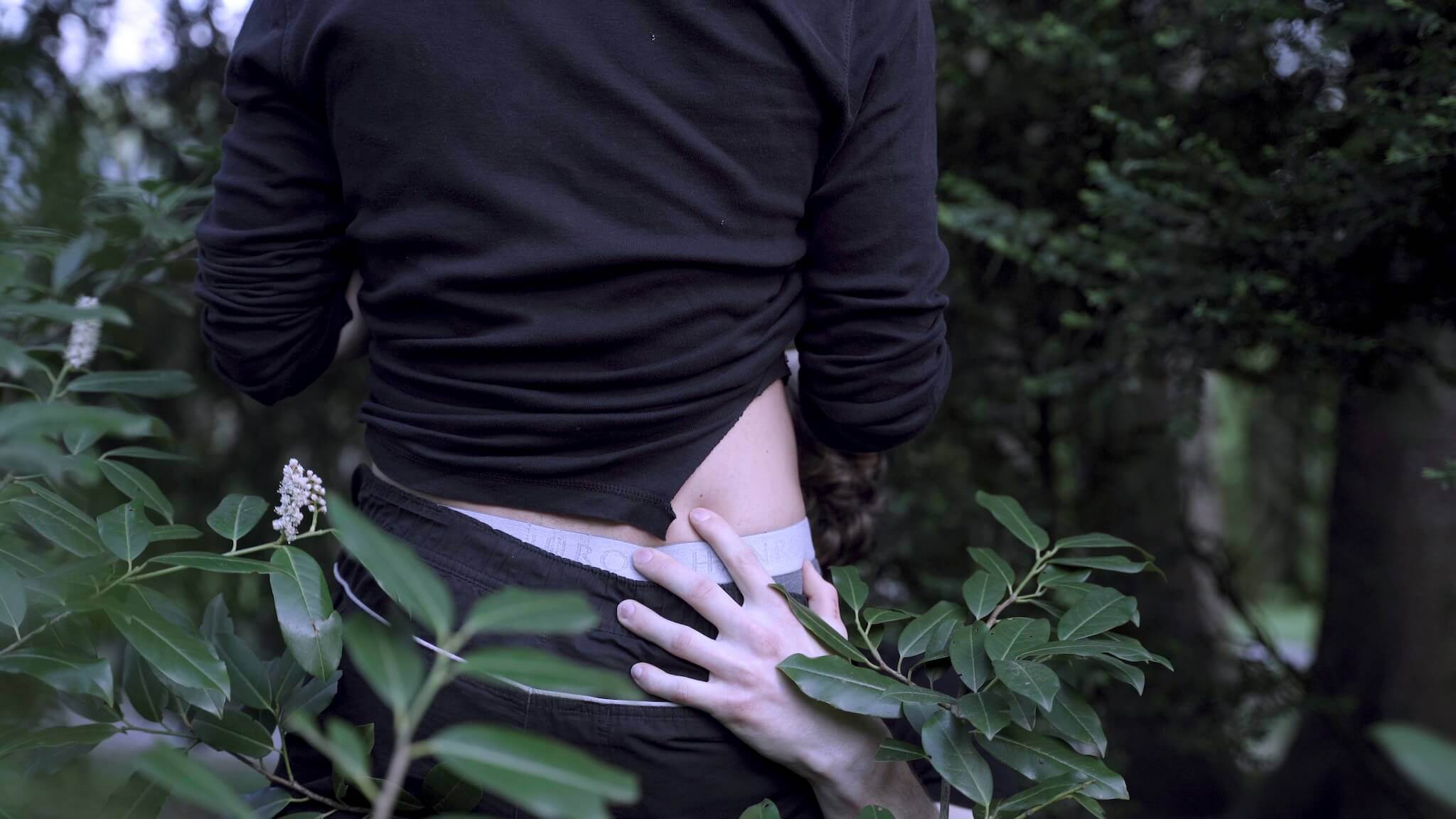
Agil. “Hyper-possibility” refers to how queer life must imagine itself beyond current conditions. In cruising, you enter a space that exists within, but also against, the city. It is part of the city, but not sanctioned. That duality creates a special imaginative force. The abandoned train yard in the final act of Radicals in Between Trees and Dicks is a scene of possibility. Will someone arrive? Will something happen? Or will you just wait and walk? That uncertainty is political because it refuses finality. In doing so, it becomes a form of hyper-possibility. It’s not just a lack of resolution. It is an opening to what hasn’t yet been imagined. This uncertainty is generative. It is full of potential for new configurations of desire, presence, and encounter.
Davood. It seems these spaces don’t deliver a single, coherent queer story but rather assemble fragmented moments that break conventional gazes and invite open room for surprise—rebellious joy, playful rage, and shared care. How does the fragmentary nature of your “hyper‑possibility” spaces generate new relational modes and emotional registers instead of simply transmitting pre‑formed queer narratives?
Agil. Fragmentation allows for multiple entry points. The film doesn’t provide a single story of queer life in the region. That would be a kind of violence. Instead, it accumulates impressions—like sweat in a shirt or the echo of footsteps in a dark corridor.
It is a method. It is an ethic. It allows me to sidestep dominant narrative structures and instead invite the viewer into a space of emotional attunement. Fragments ask you to assemble, but they never promise completion. They invite a different kind of attention—a more sensitive, intuitive relation to the work.
Davood. You draw on Soviet‑era Azerbaijani film aesthetics—not out of nostalgia but as raw material to be re‑coded into a queer archive through appropriation and formal intervention. What specific cinematic techniques or aesthetic codes from that film history did you appropriate, and how do they function within your work to challenge or subvert their original ideological purposes?
Agil. I delved into Azerbaijani cinema from the 1960s and 1970s a long time ago, while working on another film, If the Sun Sees You, which took its point of departure from Nizami’s Seven Beauties. I was drawn to these films immediately—they seemed to speak a visual and emotional language that resonated deeply with my own practice. Those films didn’t fully serve the state narrative, but also didn’t entirely rupture from it. Beneath their ambiguity and melancholic masculinity, I sensed an artistic tension that mirrored the kind of emotional undercurrents I often explore in my work.
These films, shaped by censorship, ideology, and scarcity, developed a language that feels ripe for reinterpretation. Their theatrical blocking, static frames, and muted tones were survival strategies. I don’t approach them with nostalgia, but as unresolved codes—forms waiting to be queered. In my own work, I retain this grammar but shift its gravity—from nationalism to queer affect, from collective ideals to emotional vulnerability.
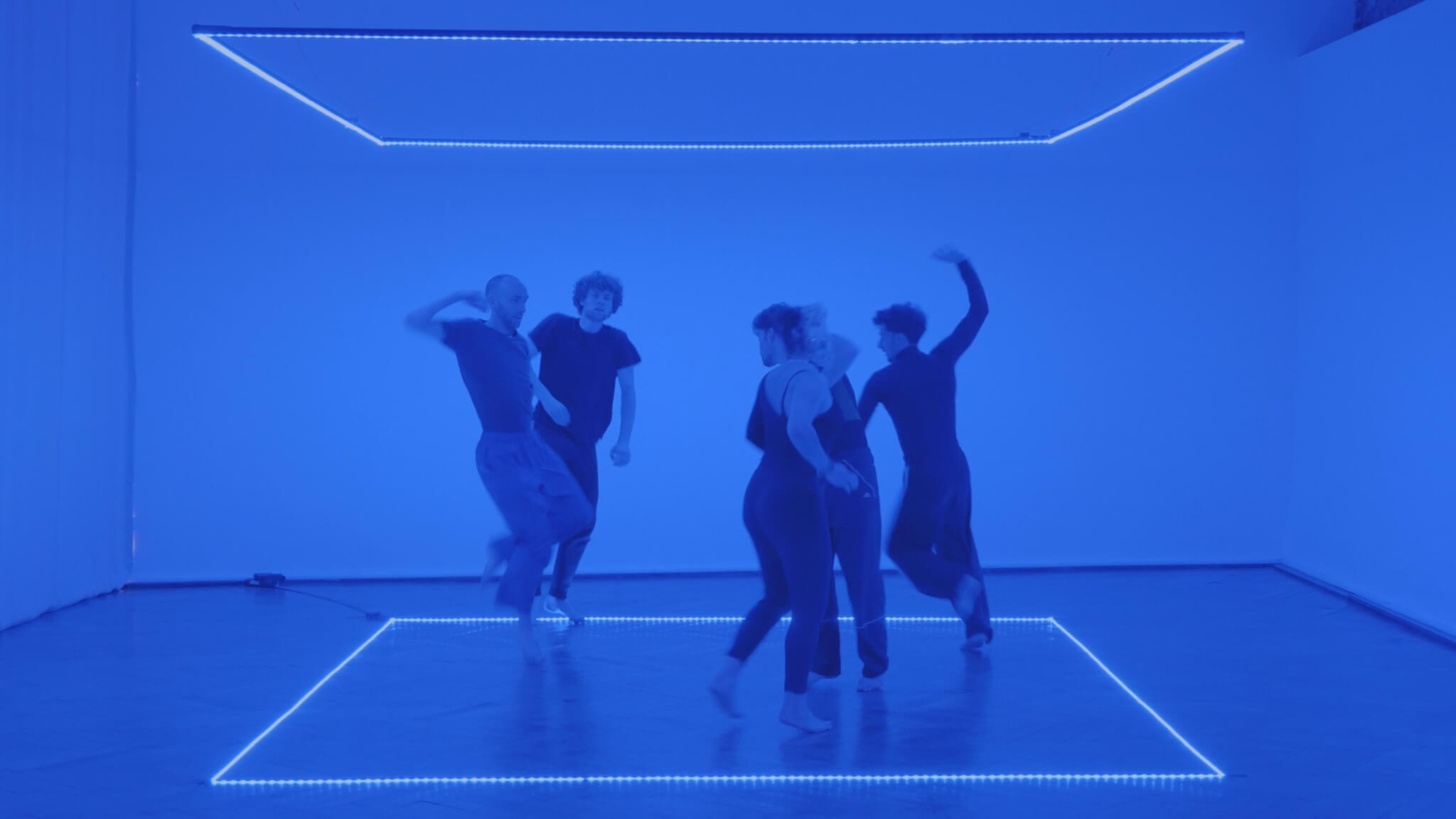
Performance becomes a site for re-reading. I also turn to Azerbaijani folk dance, not as heritage but as choreography of gender. Male dancers were trained to embody dignity, strength, and restraint—gestures tied to patriarchy and militarized masculinity. In my work, I fragment and distort these movements: a lifted chest collapses, a sharp turn slows to hesitation. What happens when such gestures are re-inhabited by queer bodies, when pride softens into tenderness?
What emerges is a counter-folklore—a choreography of deviation. The body ceases to serve the state and instead holds memory, desire, and loss. Dance becomes a way to deconstruct and reinhabit the past—not as ideology, but as emotion.
Davood. The 2022 Russian mobilization and the resulting militarized surveillance disrupted cruising circuits, turning encounters into acts of resistance. How did the war‑driven rapture of cruising under Putin’s mobilization reshape the political dimension of those spaces in your film, and in what ways do you see cruising operating as a tool of queer dissent?
Agil. The political dimension of cruising shifted dramatically over the course of the research—almost in parallel with the transformation of my own role within these spaces. When I began the project in May 2019, the terrain already felt unstable, but it was still navigable. Over the following years, so many ruptures occurred: the outbreak of COVID-19 and global lockdowns, the closure of queer-friendly bars and community venues, the hardening of borders between Azerbaijan and its neighboring countries, the growing criminalization of LGBTQ+ life across the post-Soviet region, and a general intensification of surveillance and isolation. These events changed the world around me—so organically, they changed my relationship with work.
Even my own body changed during this time. During lockdown, I gained significant weight, and that physical transformation also altered my position within cruising culture. I became less of a participant and more of a witness. This shift was deeply personal, but also methodological: it marked a move from being inside the scene to observing how scenes themselves dissolve and reassemble. The project became less about the act of cruising and more about its disappearance—its conditions, its ghosts.
But it was the Russian invasion of Ukraine in 2022—and especially the first military mobilization in September—that fundamentally altered the political atmosphere in the region. I was in Tbilisi when the mobilization was announced, and suddenly the city became a refuge for queer people fleeing conscription in Russia. The air was thick with fear, uncertainty, and exhaustion. People didn’t know if they would be forced back, if new borders would close overnight, or if the war would expand. The sense of instability was no longer abstract—it was in every conversation, every gaze exchanged in the dark.
Within this context, cruising shifted from being a covert act of desire to a precarious form of resistance. Meeting someone in a park or a forest clearing, in a time when borders were closing and bodies were being conscripted into violence, became a radical insistence on relationality. Cruising asserted: I still exist outside the machine of war. I still desire. I still refuse to be folded into the logic of nationalism or death.
In the film, this transformation is not dramatized; instead, it is felt. The latter acts become quieter, darker, and more anxious. Encounters are more fleeting, gestures more cautious. I didn’t feel it was ethical—or even possible—to record the rawness of these moments directly. Instead, I turned toward abstraction: sound becomes muffled, bodies are partially obscured, and choreography replaces representation. The uncertainty of the moment demanded a new form of listening, a new ethics of presence.
This period reshaped not only the content of the work but my entire methodology. It forced me to slow down, to accept disappearance as part of the process. It taught me that some stories can’t be captured, only felt around the edges. Cruising, in this sense, operates not just as a form of queer intimacy, but as a fugitive politics—one that resists state violence not through confrontation, but through persistence, through softness, through remaining unpredictable and ungovernable.